Grass Root: A Modern Script Font for Handmade Brands
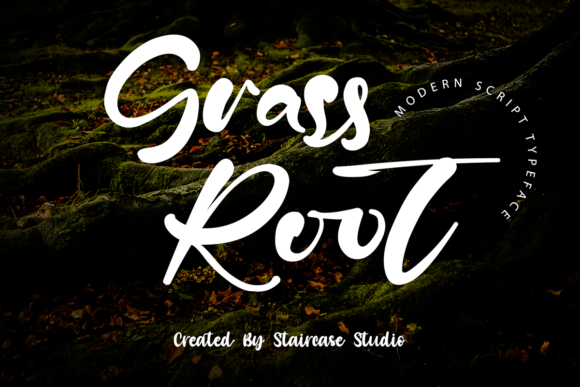
If you’ve ever spent hours searching for a script font that feels warm but not overly fussy—elegant but still grounded in real-world use—you know how rare that balance is. Grass Root is exactly that kind of typeface: a modern script font with organic flow, gentle contrast, and just enough personality to stand out on a candle label, wedding welcome board, or boutique tote bag—without sacrificing clarity or cutability.
As someone who designs printable planner pages, cuts vinyl for small-batch signs, and hand-presses greeting cards for local markets, I need fonts that work *before* they wow. Grass Root delivers that quiet reliability. Its letterforms have soft entry and exit strokes, subtle variation in line weight, and open counters—details that make it far more readable at small sizes than many decorative scripts. That means your 12mm sticker tags stay legible, your Cricut-cut “locally sourced” label reads cleanly on kraft paper, and your digital download mockups don’t need heavy kerning tweaks just to look balanced.
What makes Grass Root especially useful for physical product creators is its thoughtful construction as a display font that also respects practical constraints. It’s not built for body text—but it shines where attention matters most: on product packaging, shop signage, invitation headers, and seasonal SVG bundles. Think of it as the handwriting you’d use to sign a thank-you note to a loyal customer—not too formal, not too casual, just authentically human.
I’ve used Grass Root across dozens of real projects: farmhouse-style “Fresh Eggs” labels for a client’s backyard coop, minimalist wedding welcome boards printed on reclaimed wood, foil-stamped gift tags for a holiday artisan pop-up, and even heat-transfer vinyl for linen tea towels sold through my Etsy shop. In every case, customers commented on how “thoughtful” and “intentional” the typography felt—like part of the brand’s story, not just decoration.
For crafters using Silhouette Studio or Cricut Design Space, Grass Root cuts cleanly at sizes as small as 14pt when set to “cut edge” mode—no jagged terminals or fragile serifs to snag. The lowercase ‘g’, ‘y’, and ‘Q’ have generous descenders and loops that hold shape during weeding, and uppercase letters like ‘B’ and ‘S’ avoid tight internal spaces that trap transfer tape. When paired with a clean sans serif (like Montserrat or Poppins) for supporting text, Grass Root creates instant hierarchy—ideal for layered SVG files or printable templates where visual rhythm matters.
It’s also versatile across seasons and styles. Try Grass Root for spring botanical labels (“Wildflower Honey”), summer festival merch (“Sunset Picnic Co.”), autumn market banners (“Harvest & Hearth”), or winter holiday packaging (“Hand-Poured Soy Candles”). Its warmth reads as approachable, not cutesy; its structure reads as intentional, not generic. Unlike some script fonts that lean heavily into calligraphic drama, Grass Root keeps its feet on the ground—literally, in its name—and that groundedness translates into trustworthy brand identity.
Inside the Grass Root package, you’ll find a full character set covering Latin-based languages, standard numerals, punctuation, and common diacritics—enough to confidently design bilingual product tags or multilingual wedding stationery. There are no alternate glyphs or swashes included, which may sound limiting until you realize how often those extras complicate cutting workflows or create inconsistent spacing in print-ready files. What Grass Root offers instead is consistency: one well-drawn, production-ready style that works across mediums without requiring manual adjustments.
When designing for readability on physical goods, keep these tips in mind: Use Grass Root at 20pt or larger for printed cards and tags; for vinyl decals under 2 inches wide, stick to short phrases (3–5 words max) and avoid tight tracking; and always preview your design at 100% scale before sending to print or cut. On screen, it renders beautifully in Canva, Adobe Illustrator, and Procreate—making it equally strong for social media graphics, digital printables, and client presentations.
Pairing Grass Root thoughtfully expands its usefulness. For packaging, combine it with a sturdy, neutral sans serif for ingredient lists or care instructions. For wedding stationery, try it beside a light serif like Playfair Display for ceremony programs. For rustic signage, layer it over distressed textures or natural grain backgrounds—it doesn’t compete, it complements. And because it’s part of the Script Amp collection, it shares design DNA with other high-quality script fonts, so swapping in alternatives for A/B testing is seamless.
One thing I always double-check before launching any product using Grass Root is the commercial license. Yes—it’s cleared for use in physical goods you sell (mugs, shirts, stickers), digital downloads (PDF planners, Canva templates), SVG files for cutting machines, and client work where you retain usage rights. No hidden restrictions for Etsy sellers or small-batch producers. Just clear, straightforward permissions—because time spent reading fine print is time not spent making.
Grass Root isn’t flashy. It won’t dominate your mood board with ornate flourishes or exaggerated contrasts. But it will consistently elevate your handmade products—not by shouting, but by listening: to your materials, your tools, your customers’ expectations, and the quiet confidence of a well-chosen typeface. Whether you’re printing 500 labels for a new soap line or sketching your first logo concept in Procreate, Grass Root meets you where you are—and helps your work feel both personal and professional.
It’s the kind of font that fades into the background just enough to let your product shine—yet stays memorable long after the first glance.