Dheynamist: A Clean Monoline Script Font for Digital Branding
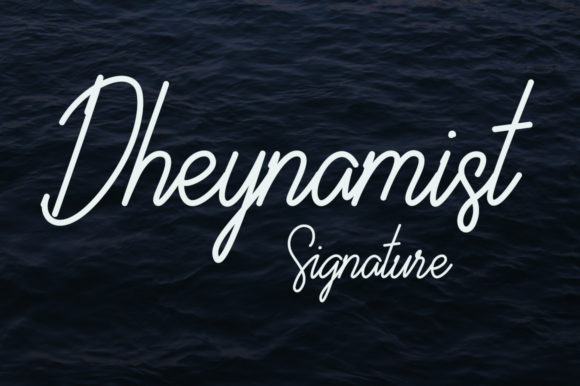
As a UI designer who ships landing pages, SaaS dashboards, and e-commerce experiences, I reach for Dheynamist when I need a script font that feels intentional—not decorative. It’s not a flourished handwriting typeface or a chaotic brush script. Dheynamist is a monoline script: consistent stroke weight, subtle rhythm, and tight letterfit that holds up across devices and contexts. That simplicity makes it unusually versatile for web design—where every font choice must serve both aesthetics and function.
Dheynamist lives in the sweet spot between personality and professionalism. Its letters flow with gentle curves and open counters, supporting quick scanning without sacrificing elegance. Unlike many script fonts that collapse at small sizes or blur on low-DPI screens, Dheynamist maintains legibility down to 24px—even on mobile Safari. That means it works reliably in hero section headlines, testimonial quotes, course title cards, and product name tags inside online stores. It’s designed as a display font, so it shines brightest at larger sizes (36px and up), but its clean construction avoids the “fussy” effect common in ornate scripts.
In layout terms, Dheynamist creates strong visual hierarchy without shouting. On a portfolio site, pairing it with a neutral sans serif like Inter or Manrope instantly signals creative authority while keeping body text highly scannable. For a boutique skincare brand’s landing page, using Dheynamist for the headline (“Radiant Skin, Thoughtfully Made”) and the CTA button (“Begin Your Ritual”) adds warmth and human intention—without undermining trust or clarity. Users don’t read *through* Dheynamist; they pause *at* it. That pause is where attention converts.
It’s especially effective in conversion-focused areas where tone matters: coaching websites, digital course sales pages, and subscription sign-up banners. Because Dheynamist isn’t overly casual or overly formal, it adapts to voice. A mindfulness app might use it for section headers like “Breathe In” or “Your Daily Reset”—soft but grounded. A design agency could deploy it for project titles in a case study gallery, reinforcing craft without distracting from the work itself.
For responsive layouts, keep these practical notes in mind: Dheynamist performs best on light backgrounds (white, off-white, soft pastels) and should be avoided over busy image overlays unless tightly masked or backed with subtle text shadows. On dark mode interfaces, test contrast carefully—its thin monoline nature benefits from a slight background tint or subtle outer glow at smaller sizes. Never use it for body copy, navigation labels, or form fields. Reserve it for short, high-impact phrases: headlines, subheads, quote citations, logo lockups, and accent text in marketing emails or social media banners.
Font pairing is where Dheynamist truly earns its place in your toolkit. As a premium script font from Script Amp, it’s built to complement—not compete with—functional typefaces. Pair it with a geometric sans (like Poppins or Montserrat) for modern digital products, or a warm humanist sans (like Nunito or Lato) for lifestyle brands. For editorial-style blogs or content-rich SaaS sites, try it with a restrained serif like Merriweather or Cormorant Garamond—just ensure the serif has generous x-height and open spacing to balance Dheynamist’s fluidity. Avoid pairing it with other scripts or highly decorative fonts; its strength lies in restraint.
Dheynamist ships with standard OpenType features—including basic ligatures and alternate characters—and supports Latin-based languages used across English, Spanish, French, Portuguese, and German web markets. Webfont formats (WOFF2, WOFF) are included, making integration into CSS @font-face declarations straightforward. There’s one weight (Regular), which aligns with its purpose: a focused display tool, not a full typographic system. That’s a feature—not a limitation. It keeps file size minimal (<40KB compressed), critical for Core Web Vitals and fast-loading landing pages.
Licensing is straightforward but essential to clarify: Dheynamist is a commercial font. Use requires an appropriate license for web embedding—especially if you’re building templates, client sites, or digital products where the font appears in live, publicly served assets. Most licenses cover unlimited domains and projects, but always verify scope before deploying to production. If you’re selling branded digital assets (like Notion templates or Figma UI kits), confirm extended licensing covers redistribution. This isn’t just legal hygiene—it’s respect for the craftsmanship behind a well-built script font like Dheynamist.
In practice, I’ve used Dheynamist for: a yoga studio’s course sales page (headline + instructor name + “Enroll Now” CTA), a handmade ceramics shop’s product gallery titles (paired with Roboto for descriptions), and a fintech newsletter’s featured article header (“Smarter Money, Simpler Choices”). Each time, it added distinctiveness without sacrificing usability. It doesn’t scream “look at me”—it invites users to lean in and connect with the message.
What sets Dheynamist apart isn’t novelty—it’s reliability. In an era of overdesigned interfaces, a clean monoline script that renders crisply, pairs predictably, and reinforces brand tone without demanding attention is rare. It supports your design goals instead of competing with them. Whether you're refining a brand identity system, launching a digital product, or optimizing a Shopify theme, Dheynamist delivers quiet confidence in every curve and connection.
- Best for: Hero headlines, section titles, CTAs, logo text, quote accents, and branded digital graphics
- Avoid for: Body copy, navigation, data tables, or any text requiring rapid scanning at small sizes
- Pair with: Neutral sans serifs (Inter, Poppins), warm humanist sans serifs (Nunito, Lato), or elegant serifs (Cormorant Garamond, Merriweather)
- Test on: Mobile viewports, dark mode, image overlays, and low-bandwidth connections
- License check: Confirm web embedding rights before shipping to production or client sites